
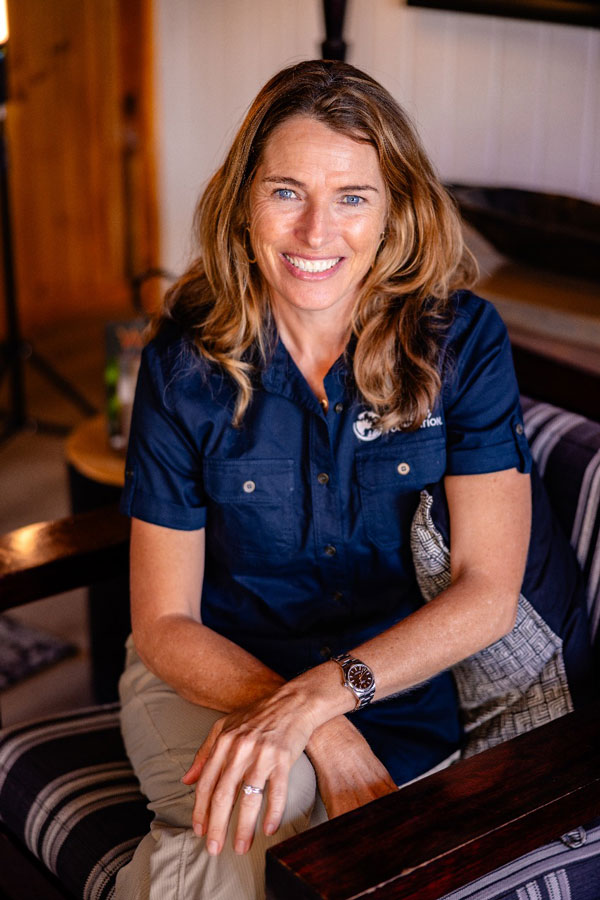
The Landscape That Shaped Her: A Conversation with Lindy Sutherland on the Bushmans River Corridor
A few weeks ago, Sannu Afrika founder and CEO, Peter Franke-Matthecka, had the privilege of interviewing Lindy Sutherland. Lindy is the CEO of the Kariega Foundation, and in this wide-ranging interview, they discuss the landscape, the legacy, and the vision driving one of the Eastern Cape's most remarkable conservation stories.
What follows is Lindy’s story - in her own words.
Q: Your father grew up on a farm in this same region. How did that shape the family's connection to the land?
My dad went to live on the farm when he was about two or three years old. His brother stayed in Port Elizabeth with his mother, so during all the trauma of the war, Dad spent those formative years on the farm, from around two or three years old until he was about ten or eleven. He was on horseback. He worked on the farmlands. He spoke Xhosa before he could speak English. Through that experience, he developed such a deep love not only for the landscape, but also for the people. When I spoke to Dad, our conversations weren't always about conservation. His vision was very much about creating employment, creating livelihoods and bringing a greater sense of wellbeing to people in the Eastern Cape.
Q: Kariega started out as farmland, not wilderness. What did those early years actually look like?
From 1989 until 2016, the focus of the business was very much on acquiring conservation land, growing the conservation footprint and expanding the lodge footprint so that there was a robust commercial product. Trust me, in the early days of Kariega they were selling a very difficult product in a completely unknown part of the world. They were essentially turning farmland back into wilderness, and it was a long, slow process. The sales process was incredibly difficult.
Q: Was there a turning point when the business finally felt secure?
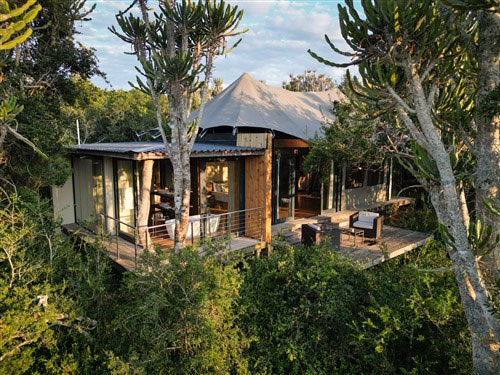
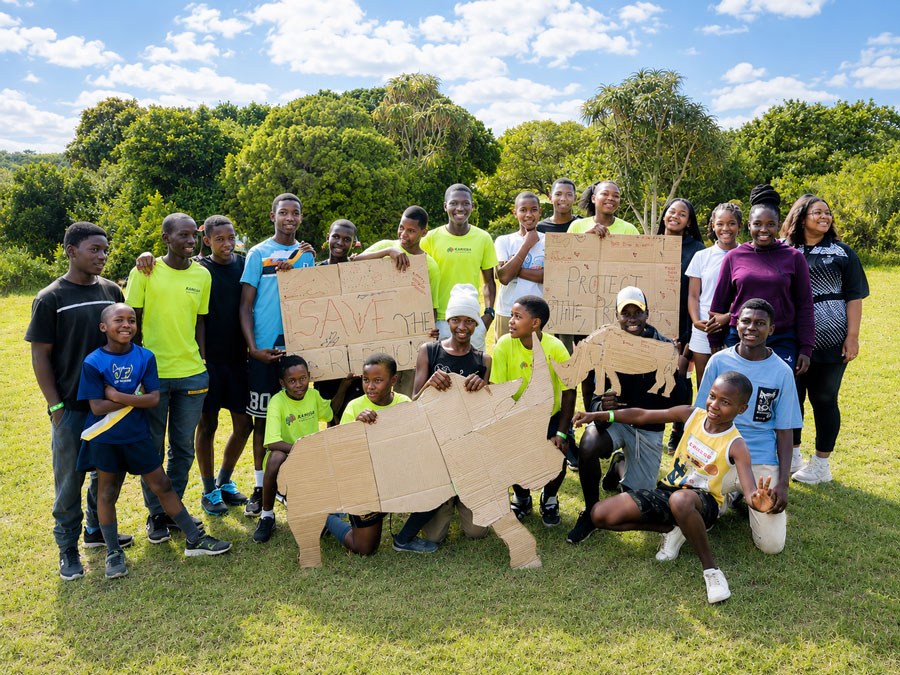
By around 2015 and 2016, we had just opened our five-star lodge, Settlers Drift. That created a pause moment on the commercial side of the business where we could finally see a possible and sustainable future for the business - we are not going to go under! We had a robust commercial model that we believed in and that was working. We were finally moving beyond that constant ebb and flow of surviving, not surviving, surviving, not surviving. There was confidence in the future of the commercial product. That was when my dad and my brothers really wanted to deliver on something that had always been a family value, bringing the communities along with us and advancing the communities on our boundaries. So, the job that was given to me was essentially, come in and reimagine this Foundation, and in particular deliver on our community objectives and our community values, because it is now time to really bring our communities along with us.
Q: You often use the word rejuvenate rather than regenerate. Why does that distinction matter to you?
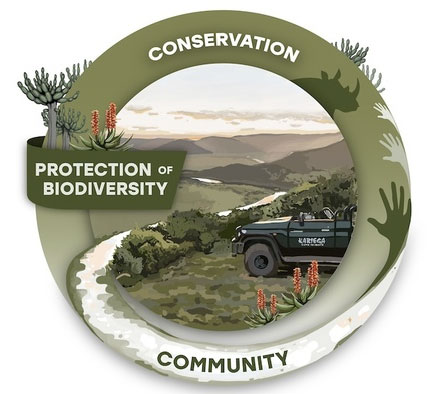
I think a lot of sustainable initiatives focus too narrowly on one point. If I'm going to neutralise my carbon credits by planting a monocrop of spekboom in the Karoo, for example, that doesn't necessarily address the broader issue. You can't work in isolation from an ecosystem. If you're going to regenerate, and I actually prefer the word rejuvenate, because to me rejuvenate feels healthy and joyful. It brings a sense of wellness and depth that simply saying regenerate doesn't quite capture. If you're going to rejuvenate an ecosystem, you have to look at the whole ecosystem, and that includes people. You cannot separate people from it. An ecosystem includes business. It includes animals. It includes wilderness. It includes rivers. It includes communities. Whatever exists within your ecosystem is what needs to be rejuvenated. It all has to move as one. That is very much what our Conservation Through Community philosophy is about. You can't move conservation without moving community. You can't move community without impacting conservation. It's a circular notion of wholeness.
Q: Looking ahead, what does the future of Kariega actually look like to you?
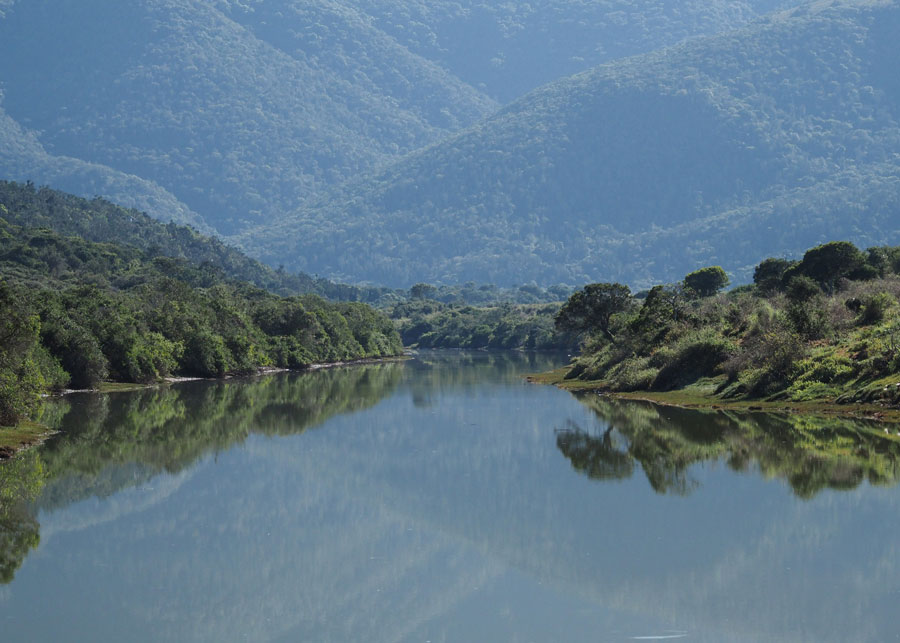
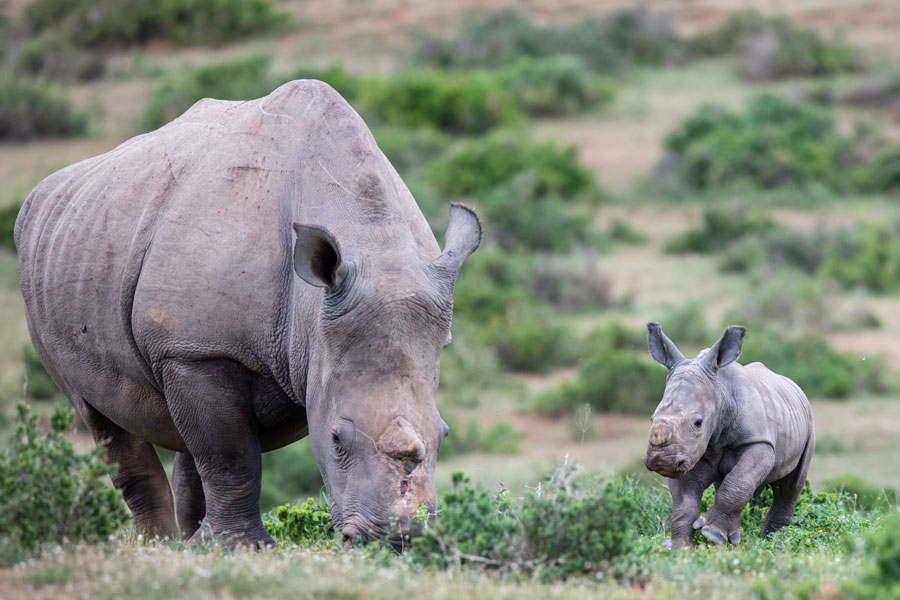
Most definitely, the actualisation of the Bushmans River Corridor. That means continuing to expand the landscape and continuing to remove fences. But it has to be done very thoughtfully and very deliberately. We're already working with neighbours on either side of us, preparing for the possibility that one day those fences can come down. The best way to do that is to establish the wilderness on the other side of the fence before you remove it. You wouldn't necessarily start with lion or cheetah. You begin with the large herbivores. Then we need to help them stock the land and get the ecological balance right. That could take five years, ten years, perhaps longer. Only then do you reach the point where you can start talking about taking the fence down. That's the nirvana. That's the future.
Q: How does that local vision connect to something bigger?
The Eastern Cape is the convergence point of two biodiversity hotspots, which makes this region a major conservation priority for our government. The broader initiative is known as the Addo to Amatole Biodiversity Node. From a national perspective, the long-term vision is for a mega-reserve of approximately three million hectares. That would make it larger than the Kruger National Park. Kariega would effectively form one end point of the Bushmans River Corridor, which would then extend inland and connect into this much larger protected landscape.
Q: After everything the family has built, what keeps you patient with such a long timeline?
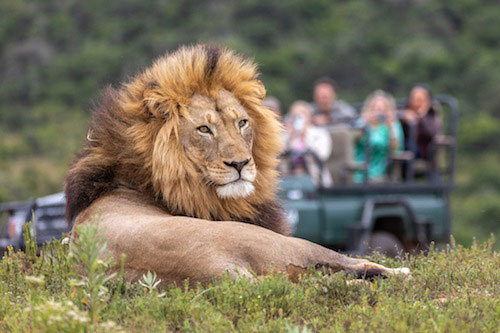
Our only objective in each of our personal chapters is to leave Kariega Game Reserve in a better place. That means our guests continue to enjoy an ever improving luxury and wilderness experience, the wildlife and the land are in a better place, the lodges, hospitality and staff on the reserve are in a better place, and our communities are in a better place. If I can pass that baton on to anyone who comes into the business, and they hold that baton and make sure that Kariega is better because we were here, then we're delivering on what our custodianship is. It's a slower burn, and that is also why it took us from 1989 to 2016 to get the ecotourism model to a place of confidence where we could then start delivering on the other aspects of the ecosystem that we hadn't yet been able to reach. It is our lived past and our lived journey that give me hope for the future. It really is as simple as that.
What Lindy describes is not a business plan. It is a baton, passed from a father who fell in love with a landscape as a small child, to his sons who built a robust eco-tourism business and a daughter who has spent nearly a decade learning how to carry it further. At SannuAfrika, this is exactly the kind of story we want our travellers to walk into, not a polished postcard of Africa, but a living, unfinished project shaped by patience, family, and an unwavering belief that the land and its people rise together or not at all. When you choose to visit a place like Kariega, you are not simply witnessing that story. You are becoming part of the next chapter of it.