Cape Gastronomy, Wine and Art
A sojourn in the cape
Three weeks in the Cape allows you to experience the region differently. Rather than moving quickly between destinations, this journey settles into four carefully chosen home bases, giving you the time and freedom to understand each one at a more natural pace.
Begin above the city on Signal Hill, exploring Cape Town through its people, history, food and creative culture. Move to the Atlantic Seaboard for ocean panoramas, contemporary art and a private helicopter journey into the Swartland, before slowing the rhythm among Constantia’s historic vineyards and gardens. Your final chapter unfolds in Franschhoek, where mountain landscapes, Huguenot heritage, contemporary art and some of the Cape’s finest food and wine come together.
Throughout, private specialists open doors that conventional touring cannot, while generous unscripted time leaves space for rest, spontaneity and discovery. It is Cape Town and the Winelands experienced slowly, personally and with purpose.
What’s Included
- Three weeks across four contrasting Cape Town and Winelands home bases
- Private Table Mountain, Cape Point, Kirstenbosch and Mont Rochelle experiences
- Specialist encounters spanning Cape history, contemporary art, botany and local culture
- Private wine, Cap Classique and cellar experiences across the Swartland, Constantia and Franschhoek
- Curated culinary experiences showcasing the Cape’s leading chefs and regional produce
- Helicopter, hot-air balloon and scenic coastal journeys offering new perspectives on the Cape
The Sannu Afrika Difference
- Intimate luxury accommodation selected for privacy, character and sense of place
- Private specialists and recurring expert hosts, creating continuity throughout the journey
- Exclusive and privately curated access to galleries, vineyards, cellars and cultural experiences
- Private chauffeured transport with scenic transitions incorporated into the journey
- A balance of curated experiences and generous unscripted time to explore at your own pace
- Thoughtfully paced days designed around comfort, meaningful immersion and minimal transit friction
the journey
Home Base 1
Cape Town City | Days 1–6
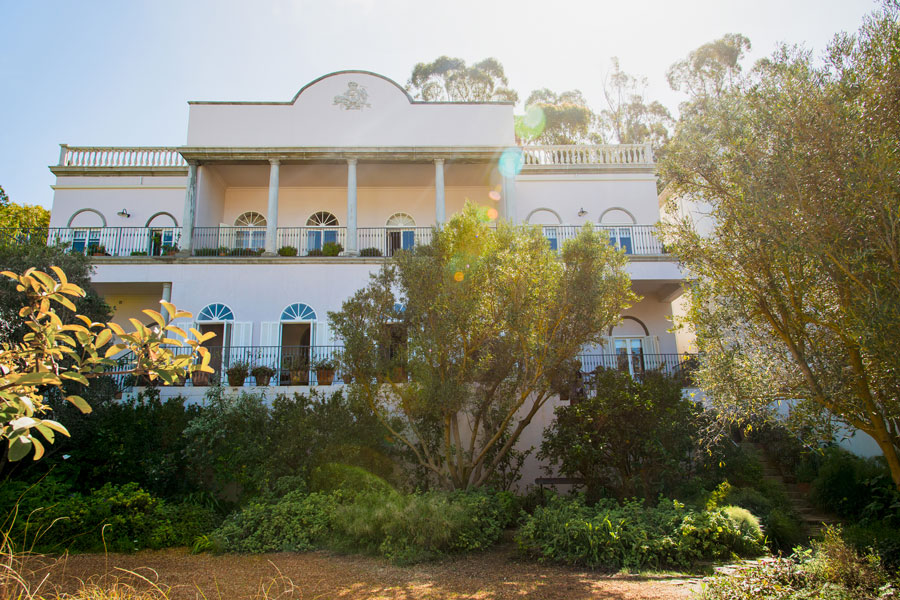
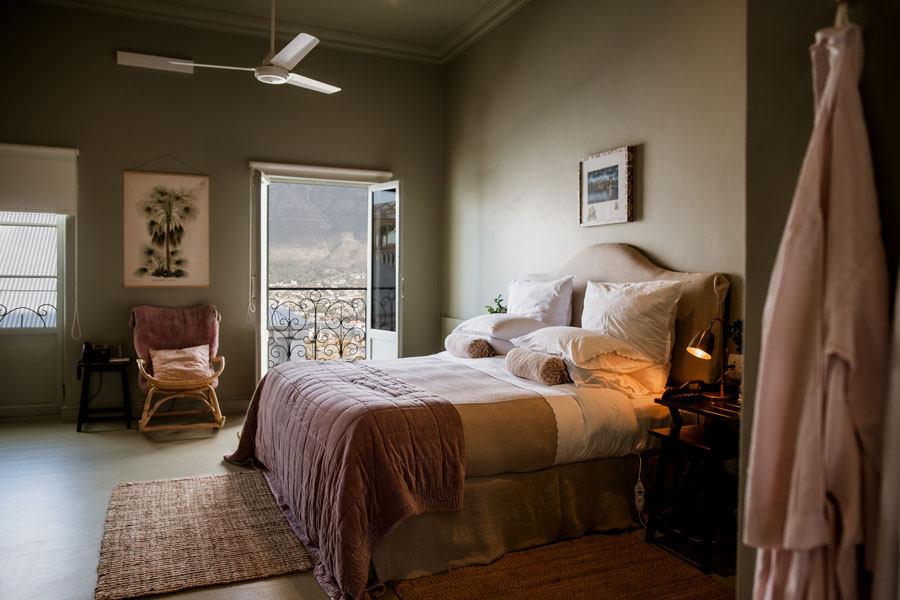
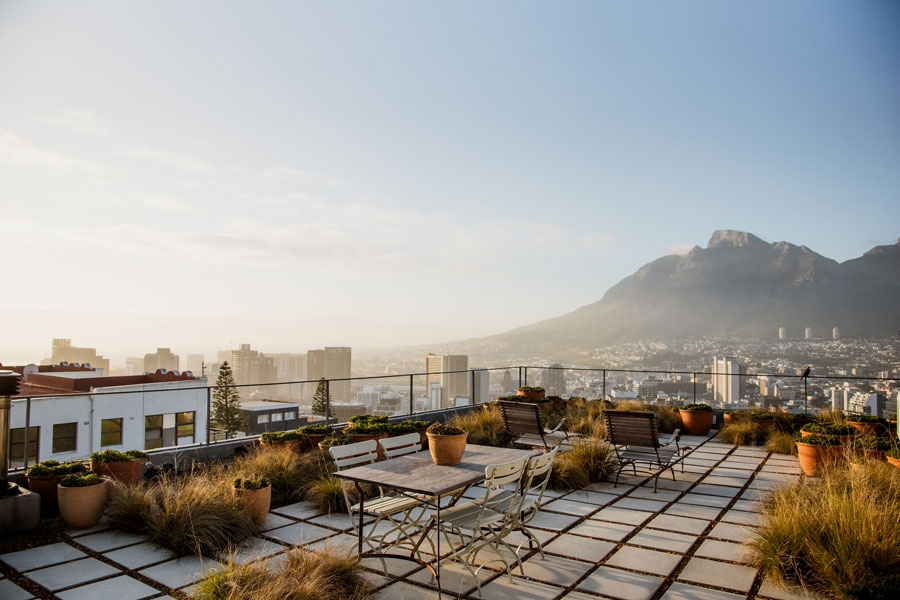
Cape Town begins not at street level, but above it. Your first home base is tucked high on the historic slopes of Signal Hill, where old residential lanes, mature gardens and mountain air create the feeling of a private retreat suspended above the city. From here, the energy of the City Bowl, Bo-Kaap and Atlantic Seaboard remains close at hand, yet the atmosphere is markedly different: quieter, greener and far removed from the sense of staying in a conventional urban hotel.
The property itself feels more like an eccentric private country house than a formal hotel, filled with antiques, layered fabrics, secluded gardens and intimate spaces reserved for resident guests. Private terraces open towards Table Mountain and the city below, while the in-house dining room means there is little need to leave once the day is done. Your first afternoon is therefore deliberately easy. Settle into the gardens with local tea or a glass of Chardonnay, wander the lower slopes of Signal Hill as evening light moves across the city bowl, then return for a relaxed multi-course dinner inspired by seasonal Cape flavours.
The following morning begins with one of Cape Town's defining landscapes. With VIP access to Table Mountain, you ascend alongside indigenous botanist Rupert Koopman for a private introduction to the extraordinary biodiversity of the Cape Floral Kingdom. Fynbos, ancient geology and shifting microclimates become part of a wider story about the land itself, before the journey descends into the historic heart of the city. Here, cultural historian Shamier Robertson leads an unhurried exploration through the Company's Garden, the South African National Gallery and the Slave Lodge, tracing the botanical, mercantile and human histories that shaped the Cape. Lunch brings the narrative into the present through contemporary South African cuisine, while the evening continues with an intimate dinner focused on seasonal produce, classical technique and carefully selected Cape wines.
Day three turns towards the lived city. In Langa, you meet private guide Zane for a walking journey through one of Cape Town's oldest townships, encountering artists, entrepreneurs, community spaces and residents going about their daily lives. Rather than viewing the area from a distance, the experience culminates at the home of Rachel Kwalanga, where lunch becomes an opportunity to encounter township gastronomy in a personal and domestic setting. That evening, the perspective shifts again during a private conversation with documentary filmmaker and author Paul John Myburgh. Having spent years living among the !Gwi people of the Kalahari, Myburgh draws upon indigenous knowledge, human evolution and his own extraordinary experiences to explore deeper questions about leadership, consciousness and what modern society may have lost in its distance from older ways of understanding the world.
Cape Town reveals another layer on day four. Once again accompanied by Shamier Robertson, you move through the city's architectural and social history, from the 17th-century Castle of Good Hope to the deeply affecting District Six Museum and the City Hall balcony associated with Nelson Mandela's first public address after his release from prison. Along the way, the day also embraces Cape Town's more playful and contemporary character: artisanal coffee, colourful confectionery, historic trading squares and the spice-scented streets of the Bo-Kaap. In the evening, the mood changes completely with a visit to a theatrical dining venue where live music and performance bring a deliberately exuberant burst of Cape Town energy.
The pace softens again the following morning, with time for a gentle walk through one of the city's quieter green or historic enclaves. This leads into one of the journey's most intimate cultural encounters: an afternoon in the home of Elize Fernandez and her partner, where indigenous Cape heritage meets contemporary African expression through conversation, food, language and music. The experience is personal rather than staged. Indigenous names and knowledge sit alongside Cape hip hop, Congolese Rumba and Lingala, while guests may also explore traditional bow-making and play alongside their hosts. It is an encounter shaped as much by participation and exchange as by performance, opening up questions of ancestry, belonging and the many cultural threads that continue to shape modern Cape Town.
Before departing this first home base, there is one final immersion into the city's thriving artisanal culture. At one of Cape Town's best-known specialist roasteries, a private cupping and coffee session moves behind the scenes of production and brewing, introducing the variables that shape flavour from bean to cup. It is a fitting final ritual before the journey moves on: small-scale, sensory, expert-led and distinctly Cape Town.
the journey
Home Base 2
Atlantic Seaboard | Days 7–11
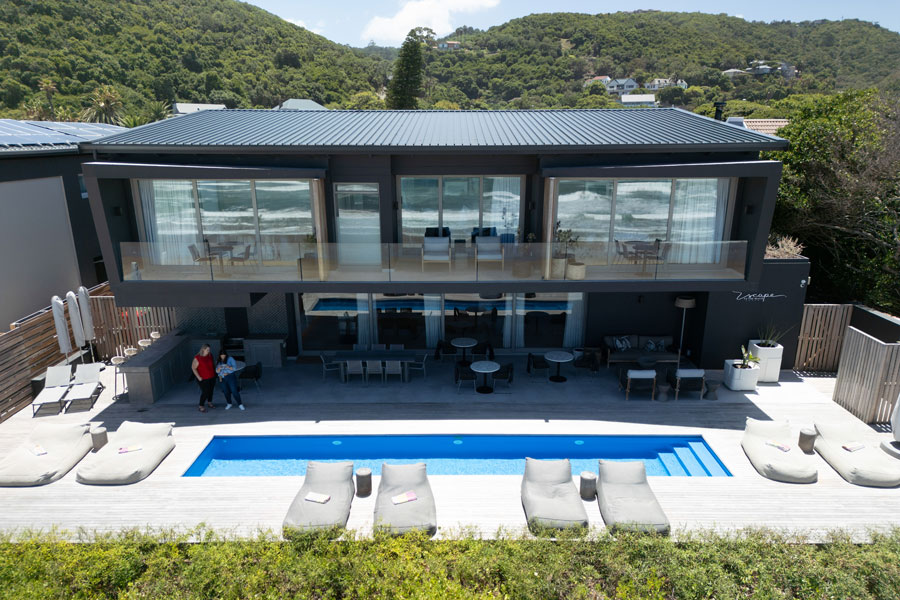
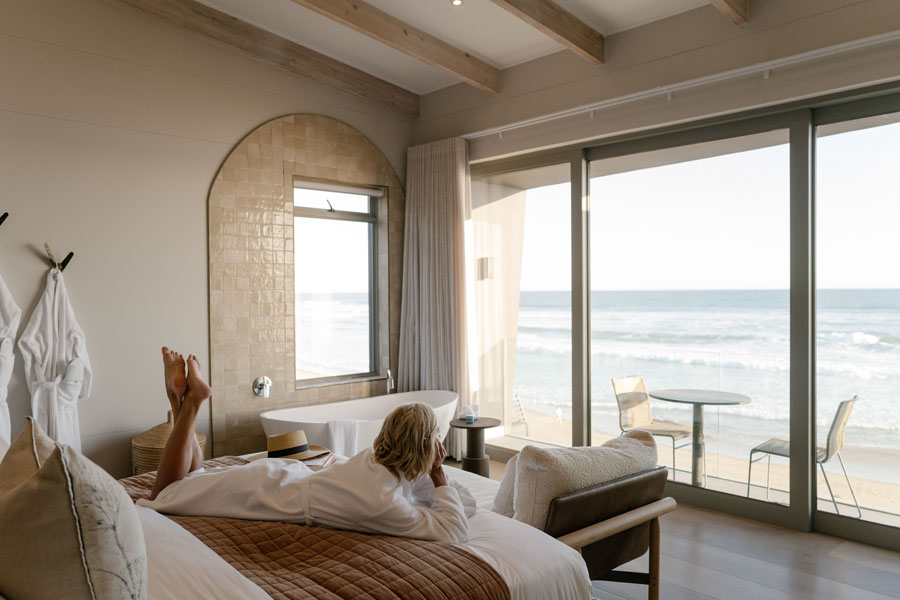
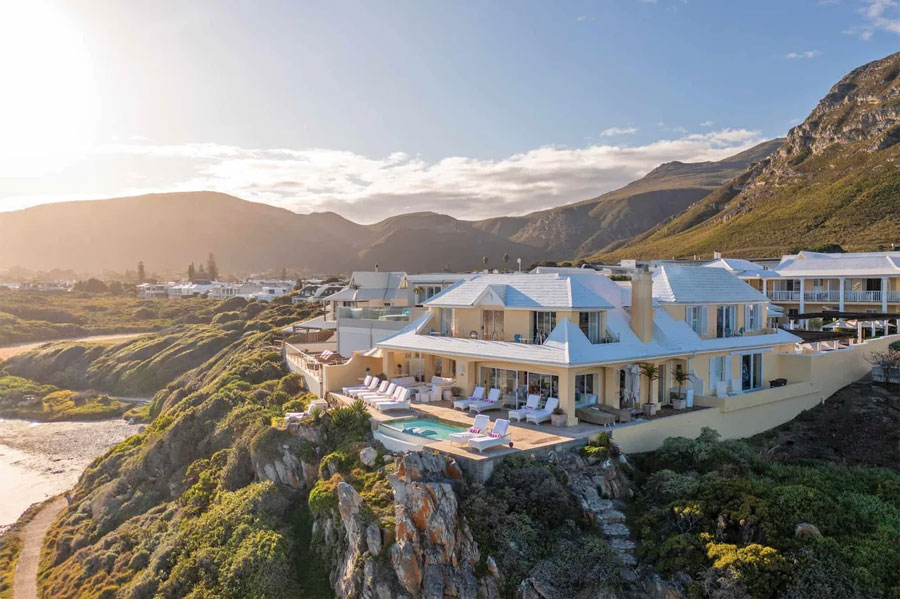
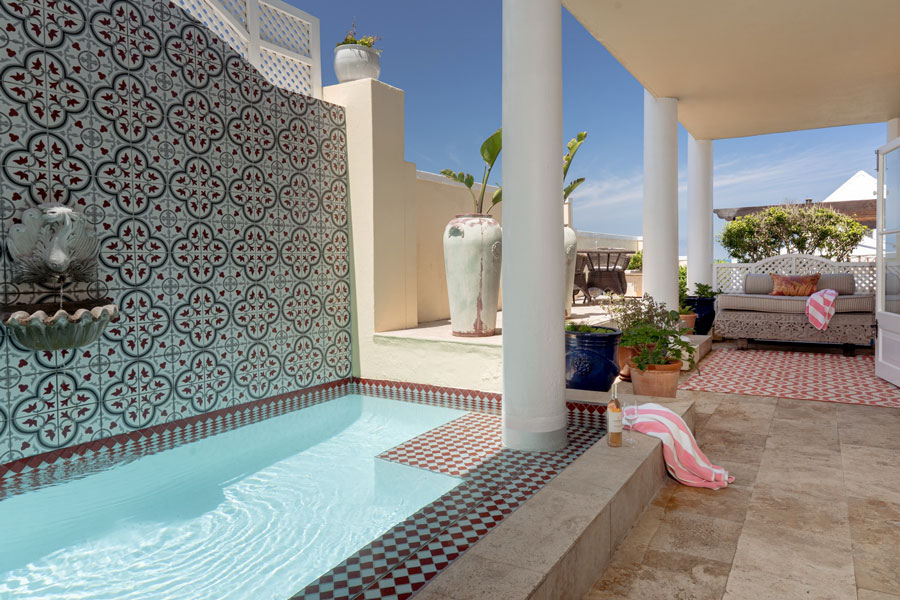
Your second Cape Town home base shifts the perspective completely. Leaving the historic slopes of Signal Hill behind, you settle into a discreet cliffside retreat in Bantry Bay, where manicured gardens fall towards the Atlantic and the soundtrack becomes one of ocean swell rather than city streets. Sheltered beneath Lion’s Head, this is one of the seaboard’s quieter pockets: close enough to reach Camps Bay, Clifton and the City Bowl with ease, but sufficiently removed to feel like a private coastal world of its own.
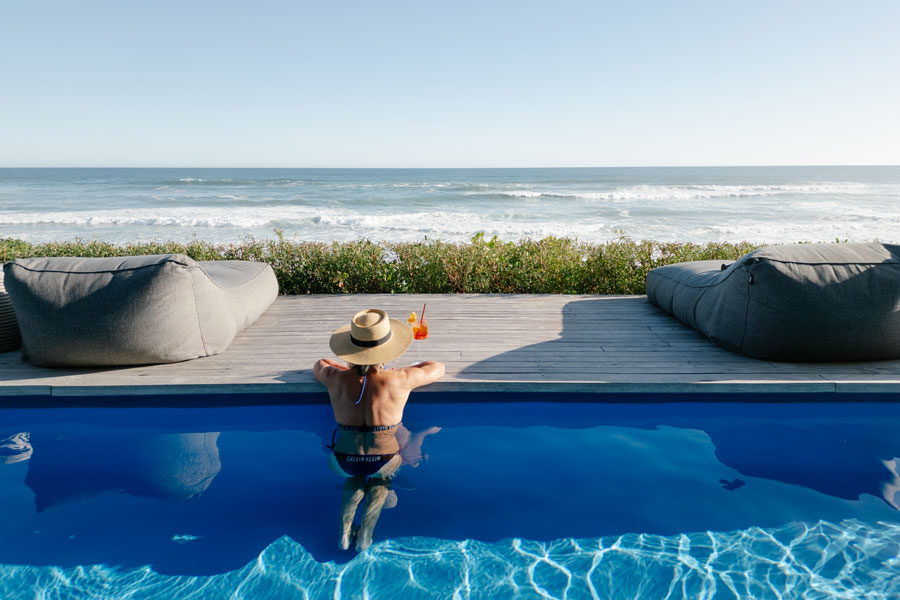
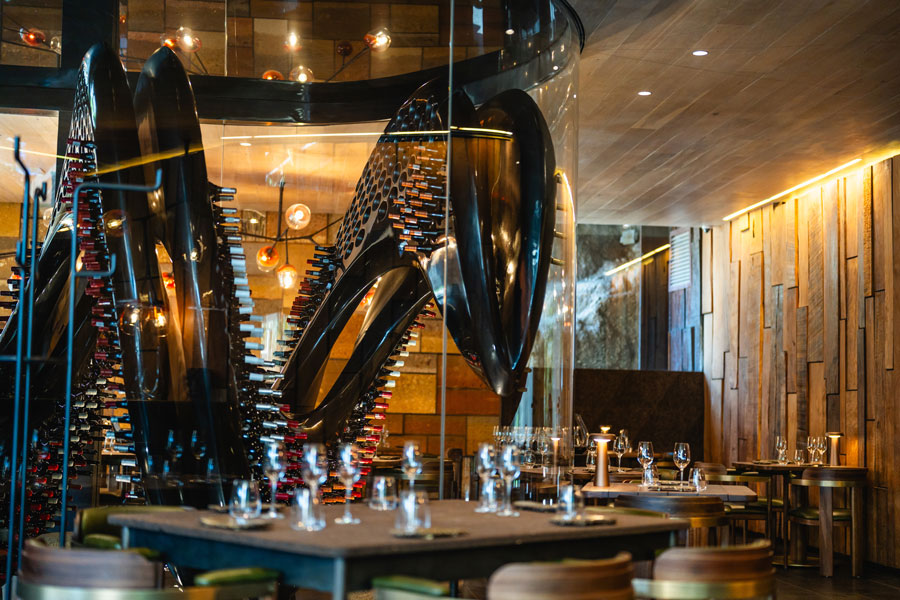
The accommodation reinforces that sense of seclusion. More private residence than conventional hotel, it combines sea-facing terraces, intimate drawing rooms and indigenous gardens with an exceptional collection of South African art and one of the country’s most remarkable wine galleries. Time here is deliberately unstructured. Guests can retreat to the library, wander among proteas and palms, or simply sit above the ocean with a glass of wine as the light changes over the Atlantic.
One of the defining experiences of this home base takes you far beyond the city itself. Departing by private helicopter, you fly inland towards the Swartland, watching Cape Town give way to mountain folds, farmland and ancient vineyard country. At one of the region’s most celebrated estates, the experience becomes intensely personal: a flight above the vineyards with an owner, a walk through regeneratively farmed vines, and a private tasting that brings the Swartland’s Syrah, Chenin Blanc and celebrated sweet wines into sharp focus. A slow, chef-prepared lunch completes the experience, with conversation moving naturally between soil, farming, provenance and the philosophy that has helped transform the region into one of South Africa’s most respected modern wine landscapes.
The following day returns you to the city, but through its contemporary creative life rather than its historic monuments. Accompanied by a private art specialist, you move through leading galleries, private viewing rooms and selected artist studios, meeting the people shaping Cape Town’s current visual culture. The route takes in both established and emerging voices, collectible design and contemporary African art, culminating in the Silo District with its distinctive blend of architecture, gallery spaces and institutional collections. Where access permits, the emphasis is firmly behind the scenes: private inventory, studio conversations, works in progress and the possibility of understanding art not simply as something displayed, but as something still being made.
Day nine begins in near silence. At first light, you rise above the Cape Winelands in a hot-air balloon, drifting across vineyards and fynbos while the Simonsberg and Jonkershoek mountains slowly emerge from the morning haze. After landing, a traditional sparkling-wine toast and relaxed country breakfast ease you back to earth, before the day continues into one of the Cape’s most refined vineyard settings. That evening brings a completely different form of immersion: a private dinner with veteran Africa correspondent Christian Putsch. Over several courses and local wines, the conversation moves beyond headlines and travel narratives into the realities of contemporary South Africa and the wider continent, drawing on years of reporting across Sub-Saharan Africa. It is less lecture than salon: candid, questioning and shaped as much by the guests’ curiosity as by the subjects themselves.
The final full day along the Atlantic is deliberately simpler. Morning coffee overlooking Camps Bay gives way to an unhurried coastal drive and promenade walk through Clifton, Bantry Bay and Sea Point. Here, the focus is on atmosphere rather than spectacle: Atlantic spray, Art Deco apartment blocks, historic seaside architecture and the daily rhythm of local life along the water’s edge. Depending on timing, the afternoon can remain open for a market visit or further time at the property, followed by a final dinner in the city.
Departure from Bantry Bay is treated as part of the journey rather than a transfer. Instead of crossing the suburbs directly, the route bends south along the Atlantic through Camps Bay and Hout Bay, then climbs onto Chapman’s Peak Drive for one of the peninsula’s most dramatic coastal passages. After a scenic pause above the ocean, the journey continues via Noordhoek and the back of the mountain, with time for a cultural stop before descending into the Constantia Valley. Lunch among the vineyards marks the beginning of the next chapter, and a very different side of Cape Town.

the journey
Home Base 3
Constantia | Days 11–16
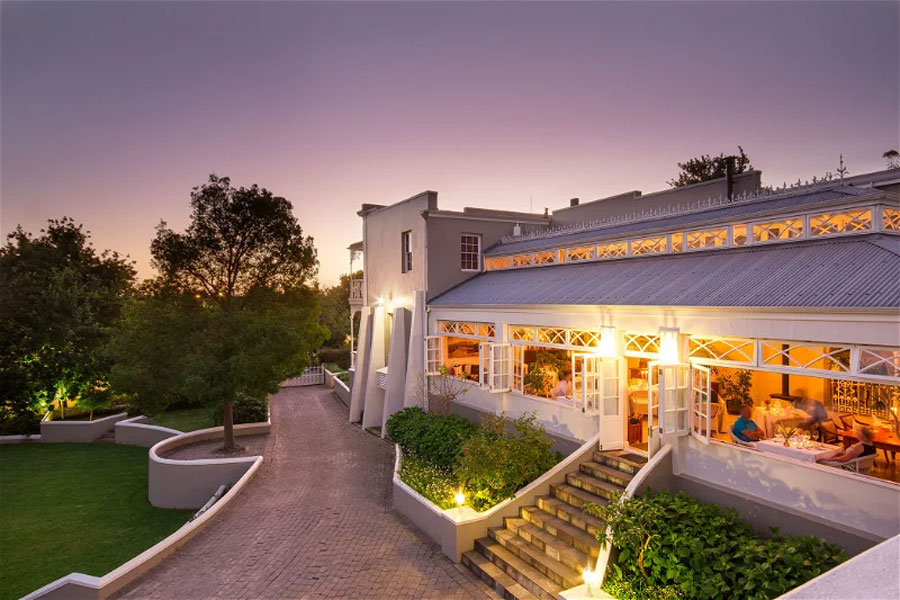
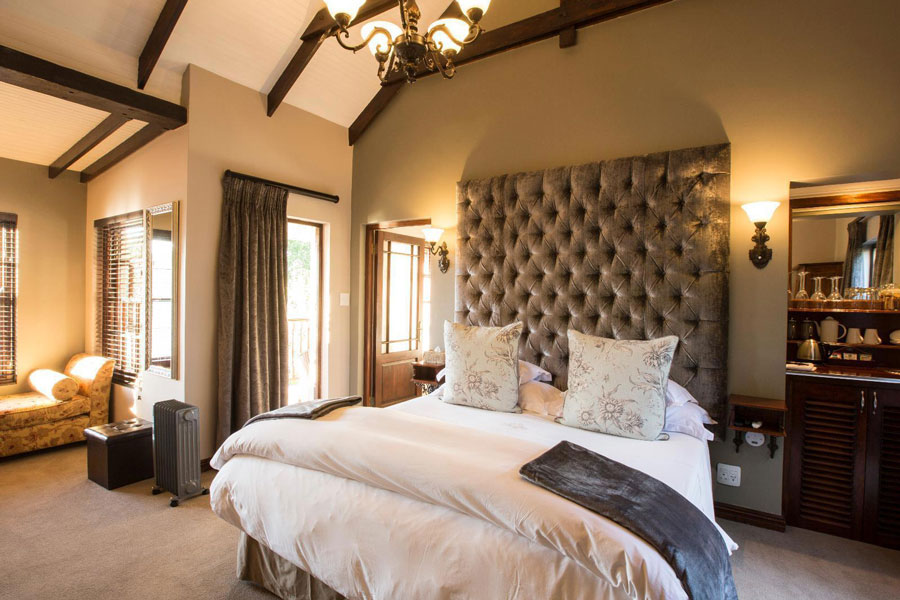
Leaving the Atlantic Seaboard behind, your journey turns towards the greener, quieter southern reaches of Cape Town. Constantia sits beneath a great amphitheatre of sandstone mountains, where heritage oaks, historic Cape Dutch architecture and some of South Africa’s oldest vineyards create a landscape that feels remarkably removed from the city. Your home here is a secluded vineyard sanctuary dating to the 17th century, surrounded by working vines, gardens and mountain fynbos. With restaurants, a spa and cellar experiences within the estate itself, the emphasis shifts towards space, stillness and the freedom to slow down.
Your introduction to the valley begins with contemporary African art. At the Norval Foundation, a private curator leads you through changing collections of painting, sculpture and textiles, placing the work within the wider historical and social currents of Africa and its diaspora. Outside, monumental sculptures emerge among indigenous wetland gardens and fynbos, with the Steenberg Mountains forming a natural backdrop. From here, settle into your new surroundings, with time to wander the vineyard paths and historic grounds before an intimate dinner on the estate.
The following morning, specialist conservation botanist Rupert Koopman joins you for a private exploration of Kirstenbosch. Beginning from the garden’s elevated reaches allows the experience to unfold gently downhill, through layers of Cape botanical and human history. Encounter the remnants of Van Riebeeck’s wild almond hedge, walk among the forest canopy, discover ancient cycads and pause within the cool, spring-fed tranquillity of the Dell. In the Fragrance Garden, the experience becomes tactile as Rupert introduces aromatic buchu, pelargoniums and other indigenous plants before the walk concludes beneath Table Mountain with a private picnic of Cape produce and chilled Cap Classique. The afternoon is deliberately your own, whether spent at the spa, among the vineyards or over a quiet tasting, before dinner overlooking the Constantia Valley.
Constantia also provides a natural gateway to the Cape Peninsula. One morning takes you south over Ou Kaapse Weg and into the Cape Point Nature Reserve ahead of the busiest part of the day. Here, sandstone cliffs, Atlantic swells and coastal fynbos replace the cultivated order of the vineyards, with time to absorb the landscape and watch for bontebok and Cape mountain zebra. The return journey follows the coast through Scarborough to Noordhoek for a leisurely lunch before several unscripted hours back at your sanctuary. As evening approaches, ascend Constantia Nek for a tasting of small-production cool-climate wines, followed by a multi-course dinner suspended above the vines as the valley disappears into twilight.
Wine is given its own day, but without the conventions of a standard cellar-door tour. Travelling by private open-top Jeep, explore the Constantia Wine Valley with access to vineyards and secluded lookout points normally missed from the road. A specialist guide introduces three of the valley’s leading estates and the maritime influences behind their wines, with tastings unfolding among the vines rather than according to a rigid tasting-room circuit. The experience is intentionally limited to part of the day, leaving time to return home and do as much or as little as you please. Later, those who wish can rejoin the coast for a private sunset picnic high above the Atlantic on Chapman’s Peak, with an optional artisan market visit when the day allows.
Your final full day reveals the gentler shores of False Bay. Arrive early at Boulders, when the boardwalks are still quiet, to observe African penguins among granite coves and clear shallows. Continue into Simon’s Town for an easy exploration of its naval heritage before following the shoreline to Kalk Bay, where galleries, antique shops and a working fishing harbour invite an unhurried wander. Lunch unfolds directly above the water with freshly landed seafood and Cape wines, before you return to Constantia for an entirely open afternoon. A spa ritual, a book beneath the heritage oaks, a vineyard walk or simply a final glass of wine on the veranda are all that need fill it.
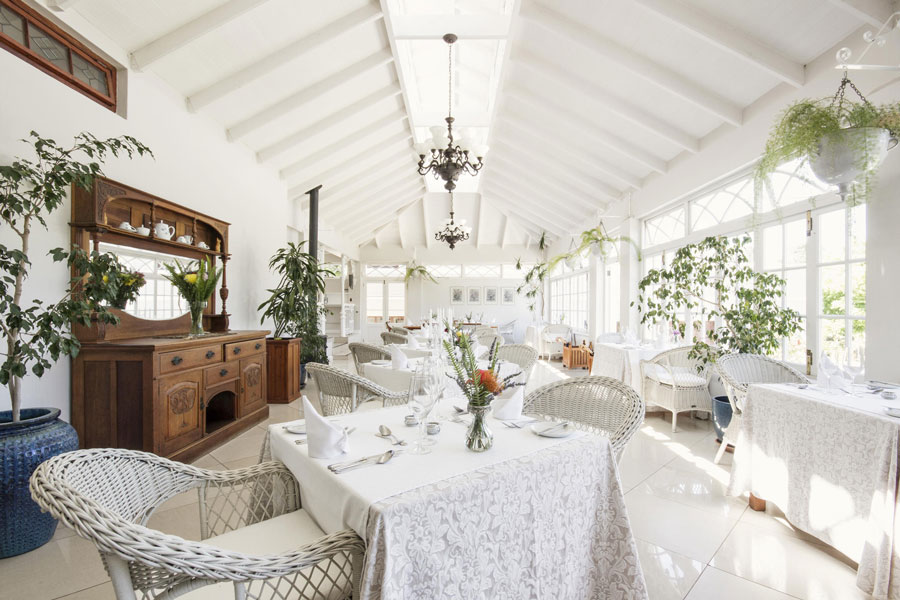
On your final morning, leave Constantia for the Cape Winelands, turning the transfer itself into part of the experience. Pause at a historic 1692 Cape Dutch farm, where eight acres of fruit, vegetable and botanical gardens provide a fragrant introduction to the agricultural landscape of the interior. Wander through shaded paths, citrus groves and formal beds before sitting down to a seasonal farm-to-table lunch shaped by produce grown around you. From here, the road carries you deeper into the mountains and towards Franschhoek, where the next chapter of your Cape Town sojourn begins
the journey
Home Base 4
Franschhoek | Days 16–21
Encircled by the Franschhoek, Wemmershoek and Drakenstein mountains, your final home base brings you into the historic heart of the Cape Winelands. Settled by French Huguenots in the late 17th century, Franschhoek has evolved into one of South Africa’s great centres of food, wine and art while retaining the intimacy of a small village. Your home sits discreetly just off its oak-lined main street, where an understated façade conceals secluded gardens, sculpture-filled courtyards and quiet pools. After arriving from Constantia, the afternoon is deliberately left open. Explore the galleries and boutiques of the village, enjoy a private tasting, or simply settle into the gardens before an informal first dinner at Protégé.
The following morning takes you just beyond the village to Leeu Estates, where contemporary South African art and winemaking share the same landscape. Accompanied by a resident curator, wander through the Everard Read Gallery and LeeuScapes sculpture gardens, encountering monumental works by artists including Dylan Lewis, Angus Taylor and Deborah Bell among vineyards, orchards and indigenous gardens. The experience continues in the Wine Studio with a private exploration of Mullineux & Leeu Family Wines, including Chenin Blanc shaped by the dramatically different granite, schist and iron soils of the Cape. After a leisurely estate lunch, the afternoon becomes your own, perhaps for spa time, a riverside walk or simply a few quiet hours back at your suite. That evening, Épice turns the focus towards another sensory language, using aromatic influences drawn from global spice routes to reinterpret exceptional Cape ingredients.
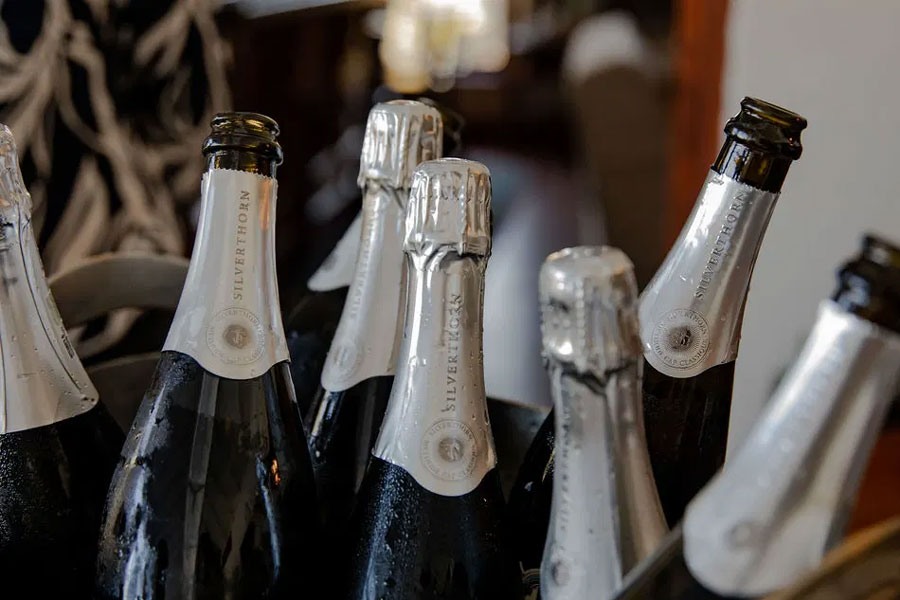
Franschhoek’s French heritage comes into sharper focus the next day. At Le Lude, descend into the cool maturation cellars for a private introduction to the traditional craft behind Cap Classique, from whole-bunch pressing and secondary fermentation to cuvées matured for years on their lees. Vintage and reserve releases are then paired with delicate canapés before a relaxed lunch overlooking rose and herb gardens. Later, the story moves from taste to scent. A specialist-led encounter with the valley’s Huguenot history leads into an intimate perfume atelier, where rare essences from Grasse meet indigenous Cape botanicals. Guided by the Kumanov family, create a bespoke fragrance of your own, a deeply personal souvenir of the valley. The French thread concludes over dinner at the intimate Le Coin Français, only a short stroll from your home.
The following morning, Rupert Koopman rejoins you for a very different encounter with the Cape Floral Kingdom. High above the vineyards in Mont Rochelle Nature Reserve, gentle contour paths carry you through wild mountain fynbos, with aromatic helichrysum, sage, restios and sugarbushes flourishing among ancient sandstone. Where Kirstenbosch revealed the Cape’s botanical wealth within a cultivated sanctuary, here Rupert interprets it in its natural high-altitude environment, connecting mountain soils and microclimates with the vineyards spread across the valley below. The walk concludes with botanical refreshments at a panoramic viewpoint before descending for a long hillside lunch overlooking the Franschhoek amphitheatre. The afternoon remains unscripted before Chefs Warehouse at Maison brings you back among vineyards and heritage oaks for an inventive shared dinner shaped by regional ingredients and global influences.
Your final full day draws together many of the themes that have defined Franschhoek. At Grande Provence, more than three centuries of Cape history provide the setting for a privately guided encounter with preserved Cape Dutch architecture, contemporary Southern African art and monumental sculpture. From the historic manor and gardens, descend into the stillness of the barrel cellar for a tutored tasting of flagship wines drawn from maturation, before settling beneath ancient oaks for a leisurely estate lunch. There is no need to rush the afternoon. Return to the privacy of your garden sanctuary, wander into the village for an artisanal chocolate tasting, or raise a final glass of Cap Classique as evening light moves across the mountains.
As darkness settles over the valley, La Petite Colombe provides a fitting gastronomic crescendo. Within the quiet surroundings of Leeu Estates, a multi-course tasting menu turns seasonal Cape produce into an extended evening of culinary theatre, accompanied by carefully selected regional and library wines. It is an occasion designed to unfold slowly, marking not simply the final dinner in Franschhoek but the culmination of a journey that has explored the Cape through its landscapes, people, art, history, wine and food.
On your final morning, leave Franschhoek via the mountain scenery of Helshoogte Pass rather than making a direct run for Cape Town. In Stellenbosch, a private encounter with Dylan Lewis takes you through his sculpture garden, where monumental bronzes emerge among fynbos, water and the slopes of Stellenbosch Mountain. Continue to the Stellenbosch Kloof for one final exploration of Cape terroir, including a private cellar tasting followed by a long, seasonal lunch overlooking vineyards and water. If time and inclination allow, pause beneath the heritage oaks of Stellenbosch for a final village stroll before your private chauffeur takes you back to Cape Town.